

Case study · E-commerce · Generative AI
An AI parts finder that delivers fast, accurate results. No part number needed.


Auto-gen
Product descriptions generated by AI for thousands of SKUs
NL
Natural-language parts search, no part number required
Lower
Operating cost per SKU as catalog grew
Higher
Customer engagement, search-to-cart conversion
About the client
A high-traffic ecommerce catalog of aftermarket ATV parts.
Wild Boar ATV Parts is a US-based aftermarket parts retailer. Customers come to the site looking for very specific things: a clutch kit for a 2018 Polaris RZR, an axle for a Can-Am Maverick X3, a rim for a Honda Foreman. The catalog runs into thousands of SKUs across hundreds of vehicle fitments.
Like most parts ecommerce sites, the product database had grown organically. Titles were SKU-led. Descriptions were sparse or templated. Search expected the customer to know the part number. The customers, of course, did not.

A small sample of the live Wild Boar catalog. Each SKU has fitment data tied to vehicle make, model, and year.

The challenge
The catalog scaled. The content and search did not.
Wild Boar's three biggest pain points were tightly linked. Adding new products meant manually authoring product copy, which slowed listings to a crawl. Customers searched in plain English ("axle for 2019 Polaris") and got back SKU pages with no semantic match. And the content team's hours were going to repetitive description-writing rather than promotion or merchandising.
The brief asked: can generative AI fix both ends of the funnel without breaking what already works?
The solution
Two AI workstreams. One ecommerce platform. Both grounded in real catalog data.
We split the work into two parallel streams: automated product descriptions, and AI-enhanced search. Both use the existing catalog as the source of truth. Both ship behind feature flags so Wild Boar's team can roll back any subset without touching the rest.
A featured deliverable
01 · Automating product descriptions.
A featured deliverable
02 · AI-enhanced search functionality.
The impact
Why these solutions worked.
Both solutions kept pace with the catalog's growth, handling increasing product numbers and traffic without rearchitecting. By automating repetitive tasks (content creation, search optimization), the client freed resources for strategic initiatives.
The catalog at scale
Twelve rims out of thousands.
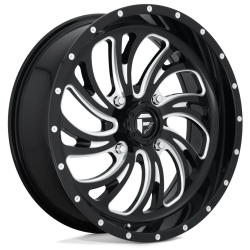
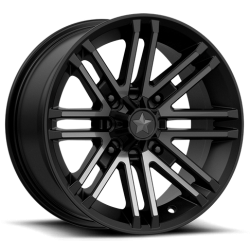
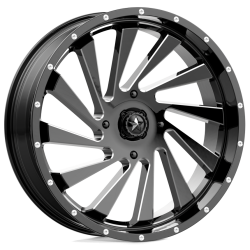
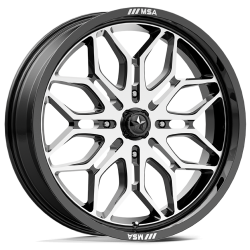
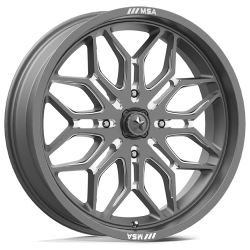
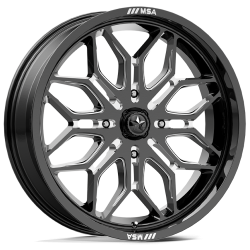
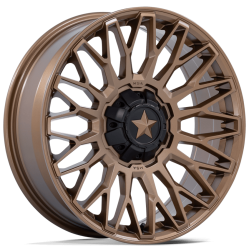
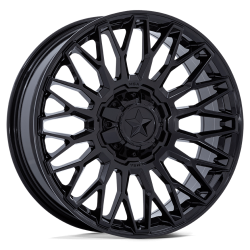
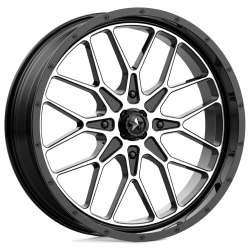
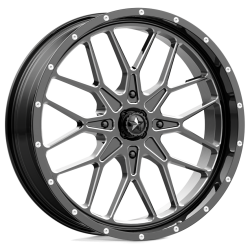
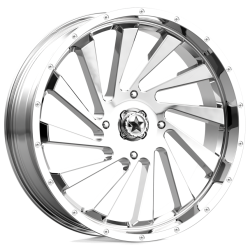
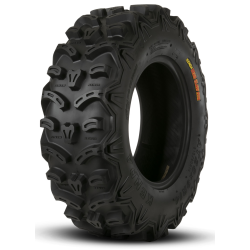
Live products, served from the same catalog the AI parts finder indexes.
Tech stack
What's under the hood.
"These AI-driven solutions significantly reduced costs, increased efficiency, and improved customer experience — showing the transformative potential of generative AI in ecommerce when grounded in real catalog data."
From the OST & Wild Boar engagement summary · Generative AI for ecommerce parts catalogs

Have a catalog or a search problem AI can actually help with?
Tell us about your catalog, your traffic, and the queries that are failing today. We will say yes, no, or "yes but smaller scope".